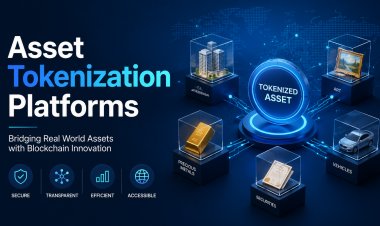
Asset Tokenization Platforms: Creating New Models for Asset Accessibility
Asset Tokenization Platform
 >
> 

Traditional investment and ownership models have long been shaped by capital barriers, geographic restrictions, administrative complexity, and limited liquidity. Access to premium asset classes such as real estate, infrastructure, private equity, commodities, and revenue-generating assets has historically been concentrated among institutional investors and high-capital participants.
Asset tokenization platforms are changing this landscape by creating digital infrastructure that converts ownership rights and economic interests into blockchain-based tokens. These platforms allow assets to be issued, managed, distributed, and transferred through programmable systems that improve accessibility and operational efficiency.
Rather than changing the underlying value of assets, tokenization platforms reshape how ownership is structured and how participation becomes possible across broader markets.
What Are Asset Tokenization Platforms?
Asset tokenization platforms are digital systems that enable the conversion of real-world and financial assets into blockchain-based tokens.
These platforms provide the infrastructure required to:
- Digitize asset ownership
- Issue asset-backed tokens
- Manage investor access
- Automate compliance requirements
- Distribute income and returns
- Support transfer and lifecycle management
The goal is to create a structured environment where physical or financial assets become more flexible, accessible, and operationally efficient.
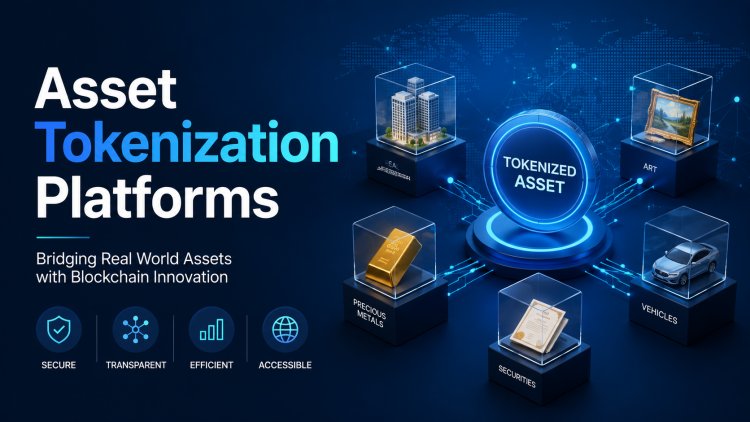
Types of Assets Commonly Tokenized
Asset tokenization platforms support a wide range of asset categories.
Real Estate Assets
Residential, commercial, industrial, hospitality, and mixed-use properties.
Financial Instruments
Bonds, private funds, debt products, and structured investments.
Trade and Receivables Assets
Invoices, trade finance agreements, and payment obligations.
Infrastructure Assets
Energy facilities, transportation networks, and public infrastructure.
Enterprise Assets
Corporate holdings, treasury assets, equipment, and inventory.
Intellectual Property Assets
Patents, copyrights, licensing agreements, and royalty streams.
Alternative Investments
Private equity, collectibles, and revenue-sharing structures.
How Asset Tokenization Platforms Work
The tokenization process typically follows several stages.
Asset Selection and Legal Structuring
The asset owner identifies an eligible asset and establishes legal frameworks that connect token ownership to enforceable rights.
Asset Valuation and Verification
The asset undergoes due diligence to determine value, ownership structure, income characteristics, and compliance requirements.
Token Issuance
Digital tokens are created to represent ownership interests, cash-flow rights, or asset exposure.
Smart Contract Deployment
Smart contracts automate:
- Ownership management
- Distribution mechanisms
- Transfer restrictions
- Governance rules
- Settlement execution
Lifecycle and Marketplace Management
Once issued, tokens are managed through platform infrastructure that supports reporting, transfers, compliance, and investor interaction.
How Asset Tokenization Platforms Are Creating New Models for Asset Accessibility
1. Enabling Fractional Ownership at Scale
One of the most important developments introduced by tokenization platforms is fractional ownership. High-value assets can be divided into smaller digital units, allowing broader participation without requiring full asset acquisition. This lowers entry barriers and expands access across investor categories.
2. Reducing Geographic Limitations
Traditional asset ownership often depends on local financial systems and jurisdictional constraints. Asset tokenization platforms support more flexible participation across regions where regulations permit. This creates more connected investment ecosystems.
3. Lowering Capital Requirements
Many premium asset classes require substantial minimum commitments. Tokenization enables smaller participation sizes and allows investors to build diversified exposure using lower amounts of capital. This expands accessibility significantly.
4. Improving Liquidity Potential
Traditional assets such as real estate and private investments often involve long holding periods. Tokenized ownership structures support more efficient transfer mechanisms and may improve liquidity opportunities. This increases flexibility for investors.
5. Expanding Access to Previously Restricted Markets
Historically, certain investment categories have been available only to institutional participants. Asset tokenization platforms create pathways for broader access by introducing programmable ownership models. This increases market participation.
6. Automating Ownership and Administration
Managing ownership records and distributions traditionally requires significant administrative effort.
Smart contracts automate processes including:
- Ownership tracking
- Payment distribution
- Investor onboarding
- Reporting and reconciliation
This reduces operational friction.
7. Increasing Transparency and Asset Visibility
Tokenized platforms provide structured digital records that improve asset monitoring and reporting. Investors gain better visibility into ownership structures and transaction history. This supports stronger confidence and governance.
8. Creating Alternative Capital Formation Models
Asset tokenization platforms allow issuers to raise capital using digital ownership structures rather than relying solely on traditional financing channels. This expands financing flexibility for businesses and asset owners.
9. Supporting Continuous Asset Participation
Traditional investment models often operate in periodic cycles. Tokenized systems introduce more dynamic ownership and participation frameworks that can support ongoing investment activity. This improves market responsiveness.
10. Integrating Assets Into Digital Financial Ecosystems
Tokenized assets can interact with broader digital financial infrastructure.
Potential integrations include:
- Digital collateral frameworks
- Automated treasury systems
- Portfolio management tools
- Digital settlement networks
- Blockchain-based financial operations
This expands asset utility beyond passive ownership.
Core Features of Modern Asset Tokenization Platforms
Successful asset tokenization platforms generally incorporate:
- Smart contract infrastructure
- Compliance and identity management
- Asset lifecycle tracking
- Automated distribution systems
- Investor management tools
- Reporting and analytics capabilities
- Security and custody frameworks
- Secondary market support
These components create scalable and efficient ownership ecosystems.
Benefits of Asset Tokenization Platforms
Asset tokenization platforms create multiple strategic advantages.
For Investors
- Improved accessibility
- Lower entry thresholds
- Better diversification opportunities
- Greater transparency
For Asset Owners
- Expanded fundraising options
- More efficient ownership management
- Improved liquidity potential
For Markets
- Increased participation
- More efficient capital allocation
- Enhanced operational scalability
Together, these benefits support more inclusive financial ecosystems.
Challenges That Influence Adoption
Despite strong momentum, several challenges remain.
Regulatory Alignment
Rules governing tokenized ownership continue to evolve across jurisdictions.
Technology Integration
Existing financial systems require modernization to support tokenized infrastructure.
Liquidity Development
Secondary markets remain at varying levels of maturity.
Legal Enforceability
Strong legal frameworks are essential to connect digital ownership with underlying assets.
Market Education
Adoption depends on improving understanding among issuers and investors.
Future Outlook: Toward Accessible and Programmable Ownership
Asset tokenization platforms are expected to become increasingly important as digital financial infrastructure matures.
Future developments may include:
- Greater institutional participation
- Cross-platform interoperability
- Real-time settlement systems
- AI-enhanced asset management
- More standardized compliance frameworks
Over time, ownership may become increasingly digital, flexible, and globally connected.
Conclusion
Asset tokenization platforms are transforming how assets are owned, financed, and accessed by creating new models for participation and value exchange. Through fractional ownership, automation, and digital infrastructure, these platforms reduce traditional barriers and improve accessibility across multiple asset classes. Although challenges remain in regulation, liquidity, and infrastructure readiness, the broader direction points toward more open and efficient ownership ecosystems. As tokenization continues to evolve, asset tokenization platforms are positioned to play a central role in the future of global investment and capital markets.